Each Saturday as we travel back to Zomba from Kainga and Pahuwa, we discuss the lesson with Hellen, our interpreter. We want to hear her perspectives on how the day went and to clarify any communication. There have been times when these discussions have helped us learn some details George and I missed. Hellen's comments and suggestions are always helpful and encouraging.
In the midst of our discussion last Saturday I turned to the back seat to tell Hellen and Samuel that the following day, March 24, was George's birthday. "I will be 39," George announced. They both laughed and congratulated him.
Sunday afternoon we pulled into the Shoprite parking lot in Zomba where Hellen came up behind the car and queitly slid into the back seat. I have had interpreters who did fair work, and I have had some that I had to help as they limped along. Hellen, however, understands the small nuances of the English language so well that it is never a struggle for either of us. My heart suddenly filled with gratitude. I wouldn't even have an opportunity to minister to the women on the mountain without her help.
I turned to greet her and saw that she was smiling. She was extending a small cake she had made from rice flour and bananas. Although this cake would never have won a baking competition, it was nonetheless a beautiful gift. I know that Hellen doesn't have a kitchen, and her cooking is done with three rocks and a pot over an open fire in her back yard.
Some of you may know that our house is in a large compound, and our groundskeeper, Harry, lives with his wife and five children in a little two room house just inside the compound walls and across the driveway from us. He tends the beautiful terraced gardens and keeps our gate. Since we moved to Malawi in November 2012, I have been so blessed by knowing Harry.
Although we have never asked him to, Harry washes our car each morning, and if we leave the door unlocked, he will wipe down the interior and clean the mats. While cleaning our car, there have several occasions when Harry has found money we dropped on the floorboard. He could have been tempted to keep money we didn't even know we lost, but he always leaves it on the dashboard. I respect Harry's honesty.
When George casually walked over to Harry's house a few days ago, he was sitting on his front porch reading a tattered Chichewa Bible that had been read and reread until the volume was expanded to twice its original size. What a beautiful unpretentious faith.
Another gift came this morning about 8:00 am with a knock at our back door. There stood Harry extending a tray of fresh picked maize from his own field. Maize we could easily buy at the market, but it was more than that. It was a gift of friendship, which is priceless.
Saturday, March 30, 2013

Thursday, March 28, 2013
Powerlessness and Deep Poverty
This morning I witnessed a scene that almost made my blood boil. As I was leaving our house on a quick errand, I saw a man sitting on a wall outside our property. I waved and went about my business. As I approached home upon my return I saw two women and three children all balancing large, heavy bundles of wood on their heads.
As the man stood up, hands empty, he began walking behind them. I then saw what he was waiting for;
it was the last of the women coming down the steep, narrow trail with her equally
heavy load, carefully avoiding the jagged rocks with her calloused feet. He was
quite obviously not the least bit interested in assisting any of them bear
their cumbersome loads. I have heard of the brokers who are the middle men for
these firewood mining operations, and how they receive the much more generous
portion of the spoils, while the women make barely enough to purchase a few
morsels for their families' dinner that night.
Tomorrow morning the long trek up the steep mountain will
begin again before sunrise for these women and children. They're trapped in
this seemingly endless cycle of toil and deep poverty. The women will grow
old, and the labor will become more and more difficult. The children will never
receive the education that would afford them the opportunity not only to pull
themselves out of such deeply entrenched poverty, but most likely they will have any
dreams of a real future dashed out before they’re ever kindled in their hearts
and minds.
One needs to spend a bit of time here in Malawi to see what
is perhaps a little less apparent, but an equally, if not more cruel reality,
and that is the devaluing of both women and girls rampant throughout much of
this culture. Women become like beasts of burden, daily fetching forty pound buckets
of water and hauling it for up to several kilometers, gathering fire wood hours
a day with which to cook by, tending to chronically sick children, and a host
of other tasks. Girls more often than
not, never finish even primary school, begin toiling right alongside their
mothers at a very early age, and are often married off at thirteen or fourteen
years of age for the sake of the parents receiving a very small dowry, as well
as having one less hungry mouth to feed. Thus the cycle begins itself anew.
Whether it's the restoring of wells, our energy efficient
brick oven projects, solar cookers, or Phyllis' hygiene, sanitation and
nutrition workshops, our work here is focused on presenting opportunities they
would otherwise never know. The wells we’ve been able to repair since our first one
in 2010 have already collectively saved the women of the many villages we’ve
worked in over 4,000,000 hours of intense water gathering labors. The
sanitation and hygiene workshops, although difficult to put a real number to
have been saving countless hours for mothers walking to and from, and sitting
for hours at local clinics. As our brick oven and solar projects take root in
many communities we are certain additional countless hours of back breaking
labor will be saved by these beautiful women and girls.
As difficult as all this is to implement, I believe that
this is the easier part. Minds and hearts are often much harder to change. When
women are made to cook, and serve the men at the dinner table, and they
themselves are made to eat separately on the kitchen floor, and when women are
often made to enter a room on their hands and knees and bow to their husbands
there are deep cultural shifts that need to occur before any real and lasting
relief can come in order for the women to realize meaningful reform, and
lightened burdens. Our earnest prayer is that the Lord will use us for His
glory in order to elevate and set free the women and children of rural Malawi.
Seasons Change
Back in NC, George and I enjoyed strolls on the beach and lighthouse climbing, walks in the park on crisp fall mornings. We loved snow gazing through streetlamps on snowy winter nights, and glorious springtime bursting with life. We enjoyed the changing of seasons.
Before we moved to Malawi in November 2012 we spent many months researching the relationship between women, wood, and water, disease and poverty, but we never gave much thought to the weather here. We knew that Malawi is on a parallel in the southern hemisphere that Jamaica is in the northern hemisphere, and I thought that meant a year long tropical climate with no real seasonal changes. But since moving here to live on Zomba Mountain we have learned that Malawi does have seasons, much more subtle than NC, but nonetheless distinct.
When we first arrived, farmers (and 80% of Malawians are farmers) were preparing their fields and waiting for the first rains of the season to plant their crops. In the rainy season, each morning a mist rises from the slopes of the Zomba range, gathering, building, and lifting to form thick clouds that completely cover the tops of the mountains. Without much warning, shadowy gray clouds cover the sky then burst into torrential downpours. This season is.marked by hot weather, heavy rains, and sometimes flooding. Many times, our backyard was covered by water several cm deep, and on one occasion, we had to take off our shoes and wade from our car to our house.
Over the past few weeks, we have noticed a change in weather patterns. The tropical downpours of the rainy season are over and it is the beginning of harvest time. Farmers are now harvesting their maize, peanuts, and pumpkins. Thick clouds no longer hang over the mountain peaks, but above the peaks there is a crystal clear, brilliant blue sky. There are rains, but they are infrequent, gentle, and short lived. Unlike in the rainy season, every ridge and crag of the mountain peak above us are visible, and every spring pouring from the side of the mountain sparkles in the sunlight. A few days ago, we saw for the first time two little houses nestled in a fold in the mountain side.
Burr! Mornings are chilly, so we slide on our slippers before putting our feet down on the cold concrete floor. We quickly dress then I pull on a jacket. This is the crisp clear air of fall. Each evening about sunset a cool breeze pours down the mountain ridges above us and gently lifts our kitchen curtains and surges through our house. Then, overnight temperatures drop, so we pull that warm blanket and comforter around our chins. We haven't used it yet, but maybe it is time to light up that large fireplace in the livingroom, the only heatsource in this old house.
Tuesday, March 26, 2013
What is a Respiratory System?
I want to tell you about our Sunday afternoon class with the women here on the mountain. This past Sunday was our largest class yet with 28 women attending. Most of them bring their infants or toddlers with them, but that is never a problem. Usually the babies are sleeping or nursing, and the toddlers are playing quietly at their mothers' feet.
Every chair in our house was filled, and many women sat on the floor. In rural Malawi women usually sit on the ground, and when they want to honor us, they bring out two chairs for George and me. There are no stores that sell plastic chairs in Zomba, but I hope to find a source for them soon. In our house, I want every woman to feel honored.
Our lesson was about respiratory disease because lower respiratory disease kills more people than HIV/AIDS or malaria, and about half of them are children. I always begin the lesson by assessing what the women already know, so I asked, "If you could see inside your body, what are the organs, the parts of your respiratory system, that enable you to breathe?" I was amazed at their answers. One said liver. Another said heart. How would these women know how their bodies work when they have had little opportunity to receive an education? Also, the patient to doctor ratio is 88,000 patients per doctor, making adequate health care impossible. So, I started with very basic information about why and how one breathes.
Then I taught them about the communicable diseases that affect the respiratory system. When I mentioned laryngitis and bronchitis, they told me they never heard of them, but when I described them, most of them said they have had those symptoms. I covered an array of diseases, from the common cold to pneumonia and tuberculosis. Tuberculosis is common here, and most of these women have had pneumonia. Next, I taught about how germs are spread through contact and through the air and how personal hygiene helps keep these diseases from spreading.
Then I taught them about the communicable diseases that affect the respiratory system. When I mentioned laryngitis and bronchitis, they told me they never heard of them, but when I described them, most of them said they have had those symptoms. I covered an array of diseases, from the common cold to pneumonia and tuberculosis. Tuberculosis is common here, and most of these women have had pneumonia. Next, I taught about how germs are spread through contact and through the air and how personal hygiene helps keep these diseases from spreading.
Then I asked the women to show me what they learned about the spread of germs. I grouped them in 5s and gave them two options to show what they learned. They could draw a series of pictures or do a skit to perform for the rest of the groups. Malawians love drama! All but one group decided to do drama. The women were very funny and really enjoyed that activity.


In their next activity outside, each group was given a cup of soap bubbles and a homemade bubble wand. They were to blow the bubbles into their groups to illustrate how easy it is to spread germs by breathing, coughing, or sneezing on someone near them, and how the germs just hang in the air and are spread by the wind. The women enjoyed it, and their toddlers loved it! They were running through the bubbles and laughing.
When we gathered again inside, and I told them again that Jesus loves them and died for them. I reminded them that Sunday is Resurrection Day, a day to thank Him for all He has done for them. Then I prayed for the women to experience the love of God for themselves and to realize how much He loves them.
I pray that the knowledge these women are gaining week by week will be applied to keep their families healthy and to save lives. I also pray that the love of God I share each week will soak in and the women will surrender to Him. That will save them for eternity.
Wednesday, March 20, 2013
Vulnerable Children
In the US, much thought, effort, and money goes into
nurturing, protecting, and caring for children. In affluent families, children
have the latest in toys, shoes and clothing, and as they get older, the latest
electronic gadgets. They are well clothed, fed, and entertained. When they speak,
children are listened to, and it is common for parents to earnestly converse
with their children and to treat them as equal participants in adult
conversations.
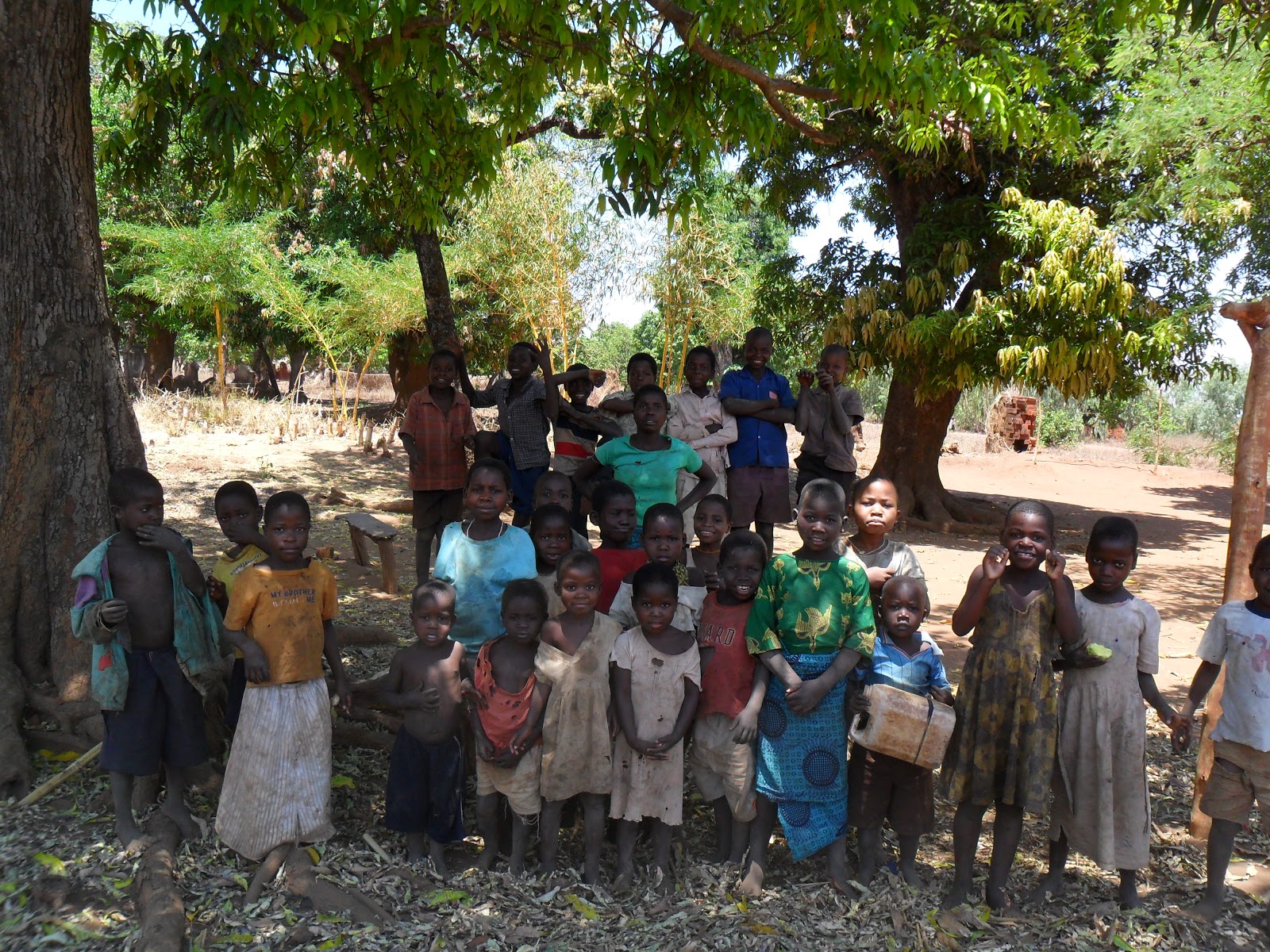
Because parents fear the abduction of their children, they
are closely guarded in all public places, and a parent who leaves a child unattended
at home or in a parked vehicle risks arrest for child endangerment or neglect. As prescribed by law, young children cannot
wait at a school bus stop without parental supervision.
In rural areas of Malawi, the demands of life are sobering,
and activities focused on survival, such as collecting firewood and water,
working in their fields, and collecting and preparing food require many hours of
labor each day.
Young girls are considered part of the labor force of the
home, and as soon as they are able to bear the load, they are given
responsibility for helping to collect water and wood and for caring for younger
siblings. It is common to see girls as young as 6 carrying infants or toddlers
on their backs to free their mothers for other tasks. When they are not playing
with other children, I have seen children quietly congregate at a distance
around the periphery of adult conversations, listening and observing. They are
seen and not heard.
Women have the major responsibility for raising children and
making sure they are clothed and fed, but among the poorest, there doesn’t seem
to be much left for nurturing their children with the exception of infants. When
strapped to their mother’s backs, infants are usually content, and almost
without exception their need to nurse is promptly attended to. Men are
certainly not seen as nurturers, and it is exceptional to see a man carrying or
holding a child.
Children in the US are constantly under the watchful care of
a responsible adult, but that is not the case in rural Malawi. As we drive into villages we frequently see
young children, 2, 3 or 4 years old, playing in fields or along roadsides some
distance from home with no adults in sight.
Here it is completely acceptable to give a young child five
or six years old responsibility for walking some distance from home along a
busy road to a community store to buy perhaps a little bag of oil or a bit of
sugar for her family, and it is common for primary age children to walk many km
along busy highways traveling to and from school. Could this kind of parenting foster a quiet resolve, independence, and
resourcefulness in children that may be necessary for their survival as adults,
or does it make children vulnerable?
I have shown you a glimpse of a child’s position in the home
and parent –child relationships. Now I
would like to show you a child’s position in the broader culture.
Families typically have 5-7 children. The reasons are disease,
death, and poverty. If that doesn’t make
sense, I will do my best to explain. The average lifespan in Malawi is only 47 years
old, largely because infectious diseases such as HIV/AIDS, diarrhea disease,
tuberculosis, and malaria take many lives. The majority of deaths from malaria
and diarrhea disease are children under age 5.
A contributor to susceptibility to HIV/AIDS
and malaria and other diseases is malnutrition. Individuals with HIV/Aids are more susceptible
to malaria, and those with malaria are more susceptible to HIV/AIDS. And people
who have poor nutrition are more susceptible to both. Lower respiratory disease
takes more lives than HIV/AIDS and malaria combined, and half of those deaths
are children under age 5. Also, because
of inadequate medical care and unsanitary practices at birth, many children die
soon after birth from cord infection.
Parents know that some of their children will die before
they are grown, so having a large family is somewhat like having a retirement
plan. It assures parents that they will
be cared for when they can no longer care for themselves.
It is a vicious and
downward cycle: the poverty and disease dictates having a large family, and
having a large family perpetuates the poverty.
The poverty predisposes one to succumbing to disease and rampant
disease robs families of resources and contributes to deeper poverty.
There are two main cultural groups here in Malawi, the Chewa
and the Yao, and about half of the population of central Malawi is Yao. Now, I
will describe an initiation of children practiced by the Yao. During
the month of July, Yao children, as young as 10 years old (some say 6 years
old), undergo an initiation that lasts about a month. To prepare for the rituals, a group of
village elders build huts away from the village along a river bank. When
they return to the village, parents release their children to these elders who
take the children back to the huts along the river bank. They will spend about
a month there teaching the children about sex. Any child who refuses to go or
tries to run away will be abducted and brought back to the site and held there
against their will. Any child who wanders near the camp will be brought into
the camp as well.
Parents here in Malawi are uncomfortable discussing with
their children the changes their bodies will go through and other sexual
matters, so traditionally this is the responsibility of their village leaders. Even city dwellers who no longer live in
their ancestral village will take their children back there to participate in
this initiation. Much of the instruction
is through crude language and vulgar songs.
The purpose is said to be to prepare the young people for adulthood, but the actual
consequence is that innocent children lose their innocence. The boys are
encouraged to experiment with sexual behavior, and the girls are told to not be
afraid of a man’s touch, that it is all pleasurable, and that they should do
whatever a man asks them to do. After
days and weeks of this, of course, the children lose their inhibitions against
engaging in sexual behavior.
Then the boys are circumcised. I have learned that several
boys will be circumcised with the same unwashed instrument with no concern for
the spread of germs or communicable diseases.
With no medical assistance, the children go naked for days and are kept
in the camp until their wounds heal.
So, at the end of this initiation, the children return to
their families without natural inhibitions, and they begin to act on what they
have learned. It takes no imagination to
realize that this initiation promotes promiscuity, early sex, early marriage, and
early pregnancy and makes the children very vulnerable to STDs such as
HIV/AIDS. Early marriage and early
pregnancy increases the odds that a girl will never be able to complete her
education, and the obvious consequence of that is a lack of economic
opportunity and a life of deep poverty for her and her children. Then when her
children are old enough, the cycle begins again.
Now I will describe a practice that is common in northern
Malawi. There, as in other parts of Malawi, families are large. Typically, a
young man marries a wife, and as soon as possible she is expected to produce
children, and a woman who cannot produce children will be rejected. As the family grows over the years, of course,
the wife’s responsibilities increase. She
performs the duties of a good wife, working in the maize field, washing
clothes, tending to sick children, cooking and cleaning and caring for her
family.
She stays very busy collecting
water and firewood. Now that there are five, six, or seven children in the
family and the wife is away from the house for hours of the day doing her chores,
the husband begins to feel lonely and wants someone to talk to. Then he will
seek out a young woman for companionship who will be his second wife. She is
young, energetic, and can attend to his every need.
My focus here is that the girl who becomes the second wife is
young. Many girls drop out of school and are married young to older men. The
young girls begin to produce children when their bodies are not fully formed, putting
themselves and their babies at risk. When a girl’s body is not mature enough to
deliver a baby, it can result in fistula, a permanent perforation or tear of
the lining of her vaginal walls, urinary tract and or bowels. A girl who
suffers from fistula is unable to control her flow of urine and or her bowels,
making her unattractive. Because of the constant stench, a girl who suffers
from fistula is rejected by people around her, including her husband. What kind of future does that leave her?
Although this has not been a pleasant story to tell, I felt
compelled to tell it. I hope each one
who reads it will be filled with compassion for the children of Malawi and will
pray for them and for our success in ministering to them. The
children in the two villages where we work are always very excited when George
comes to play games with them and to tell hero stories from the Bible, but can
God use us to have a broader influence for the good of the children of
Malawi?
Of all the vulnerable children of Malawi, the girls are
without question the most vulnerable. Starting at a young age, a girl’s responsibility
for helping with household chores often takes her away from getting an
education. Then when cultural influences encourage her to leave school, engage
in promiscuous behavior, marry young, and start having children, both she and her children are relegated to a
life of deep poverty.
We know that a good future for these girls starts with their
knowing that they are made by God and that their lives have purpose. It is
knowing they can make choices with their lives that can positively change their
futures. It is also determining to stay morally pure and finishing school. May God enable us to be an advocate for the
children.
Tuesday, March 19, 2013
What Will It Take?-A Malaria Free World
Worldwide,
there are between three hundred million and five hundred million new cases of
malaria each year. Approximately 1,300,000 malaria deaths occur annually, and most
of these are children under five years of age. Since reaching its low point in
the late 1970’s, the incidence of malaria has been steadily increasing. The
shift in locale of infectiousness has moved quite rapidly from Asia to Africa,
where now nearly 90% of all new cases occur. An impoverished African family
will spend about 28% of its annual income on malaria related expenses. For each
million new cases of AIDS there are between seventy and one hundred million new
cases of Malaria.
It is
common for men in rural Africa to pressure their wives into having many
children; six to eight per family is not at all uncommon, and many men will not
allow their wives to use any kind of birth control. The reasoning is there is
such a high mortality rate among small children that in order to assure their
posterity they must produce larger families. The women suffer in multiple ways
from this practice. First of all there is the overwhelming burden of caring for
such large families while living in deep poverty. Bearing so many children also
takes a great toll on a woman, and finally the mosquitoes, which carry malaria
are attracted to the scent given off by lactating mothers, making them the highest risk group for contracting the disease, as they can spend between ten to twelve years of their lives either pregnant or nursing. They also run the risk of passing malaria on to their newborns.
The
numbers can sometimes be overwhelming to where you just want to cry, and at
other times they simply numb the senses to where there seems to be little
reaction at all. That's what statistics do, but when those cases of malaria,
and cholera, and food shortages, and dirty drinking water become the very
people you spend time with each week, you just want to be used to make a real
impact. "Here am I LORD, send me." Isaiah 6:8.
After
reaching an annual peak of 3.5 million worldwide in the late 1940’s, a sharp
decline in the number of malaria deaths occurred through about 1960, when a slower
but still steady descent continued until the mid-1970’s. At that point both
infections and deaths began steadily trending back upward. Hidden within these
numbers, however is the disturbing reality that while Asia, the prior world
leader in malaria cases was joining the rest of the world in conquering the
disease, Africa was swiftly becoming its new breeding ground
Could all
this have occurred as a result of policy decisions being made oceans away on a
seemingly unrelated issue, and if so, what? Let’s look at the facts. In 1972,
the then recently formed US Environmental Protection Agency banned the use of
DDT, a powerful and effective insecticide, from use in agricultural spraying.
From that point forward environmentalists pushed hard for a total worldwide ban
for any purposes whatsoever. Although they have never achieved their intended
goal, they may as well have, as pressure has since come to bear against any
nation using the substance for any and all purposes.
Most poor
African nations have bowed to that pressure, disallowing DDT’s use even in what
had proven to be the single most effective agent in the effort to eliminate
malaria’s scourge from the planet. Fearing reprisals from a number of European
nations, who have threatened to cut off imports if even a trace level of DDT is
found on produce. Spraying very low level amounts of DDT on the walls of homes
has worked very well in the past, and continues to work wherever and whenever
it is applied. We need to keep in mind that those so strongly against DDT’s use
in rural Africa and elsewhere live in areas of the world where malaria is not
an issue, and perhaps has been that way for several generations.
All the
anti-malarial medication available throughout the entire world today is enough
to treat only about 10-15% of those infected, leaving the other 85-90% with no
available treatment at all. Chemically treated bed nets, which are made
available in many African nations on a limited basis to those most vulnerable
to infection, pregnant women and children under five, only protect at certain
times of the night, and obviously not the entire family. Clinics which are
supposed to have these nets on hand for distribution very often do not.
Additionally, the nets lose their potency over time, tear, and can be easily
kicked aside during sleep, and become ineffective as a result. Although they
were intended to be handed out free of charge, many are sold on the lucrative
black market; some even winding up being used as fishing nets.
How is DDT applied in the home,
and is it safe? A family is moved out of the house, along with all their
furniture, the walls, where the female mosquitoes typically lodge between their
feeding cycles, are sprayed with a DDT solution in quantities a small fraction
of that which was used to spray crops, and after waiting twenty four hours, the
family return. Only a small percentage of the spray would ever escape out the
windows or door. Any potential harm from such a small quantity would be
immeasurably insignificant. Unlike is the case with bed nets, or anti-malarial
drugs, the entire family is protected. The applicator, of course, is a trained professional. In order to be
effective long term this process is repeated about twice a year. Mosquito populations
drop off dramatically, as do new cases of malaria.
As experts on both sides of this
debate have been kicking any decision-making back and forth like a ping pong
ball for decades now, the result has been more death and heartache for the
powerless people of hundreds of thousands of rural villages of Africa and other
parts of the Third World. It is not our goal or mission to get entangled in the
fray, but we will continue to educate the women and children on how they can
improve the odds against their contracting malaria, cholera, and other devastating
diseases. Our prayer and hope however, is that those who hold the decision
making powers in these nations would do what is right for the disenfranchised
innocents in this battle.
Monday, March 18, 2013
Hospitality in Pahuwa
Saturday in Pahuwa was a special day. We were introduced to
Chief Ibrahim, a kind and gracious man, who
made us feel very welcome in his village and thanked us for our work to train
women in ways to keep their families healthy.
He indicated that he is also concerned about the health of his village,
especially expectant mothers and children under
age 5 .

We learned that the partially built bamboo structure a short
distance from the chief’s home is being built to house a medical clinic. He
asked us if we could persuade donors to give so that they could have an under
five and prenatal clinic.
The nearest clinic, Maquapala , is about 6.5 km away from Pahuwa,
which is quite a distance for a woman to
walk for a prenatal checkup or to deliver her baby.
We told the Chief that we would attend an event with the US
Ambassador in a few days and that we would seek an opportunity on that occasion
to ask her for the assistance he requested. We told him that we are Christians
and that we pray for his community because it was the love of God that first brought
us there. We asked him to also pray for God’s blessings on his village and that God
would enable us to continue to be a blessing to his community. He responded, “Of course we pray. We are
Muslims.”
Then the women invited us to a large sports field where George
and Samuel played games with the children. On every visit to the village, George teaches a brief lesson about practicing good sanitation and hygiene. He also teaches them hero stories from the Bible. On this visit, one of the children asked to hear the story of David. It was amazing because this is the story George had planned to teach! Every week the children look forward to storytime.
Nearby, the women spread out a large
bamboo mat for Hellen and me to sit on. The women sat in a broad circle on the ground around us,
and we began our lesson on family planning.
A few young teenage girls were sitting near me on the front row. I
assumed they were children who wandered in on this meeting. When Hellen asked
them to go and join the other children, they said that they wanted to be in the
class because they are already married.

The class went well. There were about 18 women attending the
session. I taught them that their bodies were made by God and they deserve to
be respected. They learned that they should respect their own bodies and that
they should require others to treat their bodies with respect as well. I taught them the importance of taking
measures to protect themselves from STIs like HIV and AIDS.
I also encouraged
the women to discuss with their husbands their needs and preferences concerning
family planning. In this session, the
women learned thirteen methods of family planning, some of which require
medical assistance and some that require the approval and cooperation of their
husbands. They also learned how to determine times in their cycle when their
bodies are less fertile.
The women enjoyed the small group discussions and
activities. In one of the activities the women sorted diagrams of family planning methods
by how effective they are in preventing pregnancy and how much protection they
give against STIs.
As we were concluding the class, one of the women asked me
to wait because they had a gift for me. Several women stood up and began to
lead the others with singing and dancing. They were singing a traditional
Malawian welcome song.
Then, by ones and twos they stepped forward with arms
full of maize and pumpkins, gifts from their fields, and laid them at my feet. What a humbling experience. In this very poor
village, this was a beautiful and rich gift. We are very thankful for the open door of hospitality in Pahuwa and the opportunities this opens for sharing the love of God.
Friday, March 15, 2013
Beijing Trading Company
A huge banner with Chairman Mao's portrait hangs over the entrance
to Beijing Trading Company in downtown Zomba. Typically, the store is staffed
by two or three Chinese clerks at the register and at least one Malawi national on each aisle.
The Malawian employees’ job is to check prices, find merchandise, and to keep
an eye out for shoplifters. If you arrive in the store around noon, each one will be eating a bowl of rice. They trail us so closely as we move through the store
that their presence often feels invasive and uncomfortable. Chinese rock music is usually emanating from large
speakers on the back wall of the store.
There are several such Chinese stores in Zomba, with
basically the same merchandise, and the cashiers rotate among them. We always smile
as we stand in line, looking for a way to relate and to build some bridge for a
relationship, but until today, we have never seen even a tiny opportunity to do
so.
We found the clothes pins we were looking for, moved to the
front, and stood second in line behind a group of four chatting ladies, each of
which was buying a large bagful of colorful blankets. It was then that I
recognized the young lady behind the counter as the expectant mother I had seen
in this store on other occasions and walking along the street in Zomba a few days
before. George and I always smile and say, “Thank you” and “Have a good day” as we
take our change and exit, but in Beijing Trading Company, there has been almost
no response.
But today was different. As we waited in line, my eyes wandered over
the items on the wall by the cash register, clustered along the counter and in the
cell phone and jewelry displays. Then, nestled in a blanket, my eyes landed on the beautiful, cherubic
face of a newborn girl, sleeping peacefully on a shelf near the cell phones.
When the mother heard us admiring her little one, she came
toward us smiling broadly. “Your baby is so beautiful!” I told her. “Thank you,” she responded. Then
she took out her cell phone to show us pictures of her handsomely dressed son,
probably about 4 years of age. “They are very beautiful children,” I told her
again. She was obviously very proud of her family and enjoyed sharing it with
us.
I know it is a small thing, but in building relationships,
sometimes it is the little things that count.
May God use it to open more opportunities to share His love.
Sunday, March 10, 2013
Building Trust and Friendship
Just as we approached the village of Kainga, a woman walked
to the edge of the road and directed us away from the front of the mosque and
down a little trail beside a nearby home. We didn’t know what was happening and
were concerned that somehow we were no longer welcome in the mosque. Perhaps we
would no longer be able to teach there. My heart sank at the thought.

 I had come to teach the women how to protect their families
from malaria, a very serious topic. I had prepared great visuals and a game I
thought they would enjoy, but there will be time for that. This was a day for building trust and friendship.
The women had invited us into their
lives and shared with us something they enjoy. We count it a privilege to call the women of
Kainga our friends.
Directed by the woman near the road, we followed her in as
she passed through one home’s side yard, behind a few houses, and then near a
large cleared field where we were directed to park our truck. As we got out, a few children gathered around,
anxious to tell us something. One child stepped forward and complained to
Samuel, our interpreter, that since we gave the women the soccer ball two weeks
ago, they have been hogging the ball. Hmm. That was interesting. As we left on our last visit, George had
instructed the women to take good care of the ball.
About that time, a few women gathered around us and thanked
us for the soccer ball we gave them on our last visit. One of them was obviously anxious to tell us something
as well. She said that the boys play rough with the ball, and in their care, it
would probably not last very long. She had a request: Could we possibly get
another ball for the boys to use so the one we gave the women would last longer?
George and I thought this was a good idea. Evidently
the women thought “taking good care of the ball” is a serious responsibility.
Other women joined the conversation and excitedly told us
that they wanted to show us what they can do. Two women were carrying long bamboo poles,
each with a small metal hoop (a slightly bigger than a soccer ball) attached to
the top. They erected one of these poles on each end of the sports field. As they moved toward the field, the women asked
us to come to the edge of the field and watch them play a game called
netball. They split into teams, moved to
their positions, and the game began. In
Malawi, netball is always a women’s sport.
Unlike basketball, no
movement with the ball is allowed, so to forward the ball down the field toward
the goal, the ball must be passed from one team member to another. The aim is to keep the opposing team away from
the ball as your team advances it down the field by passing it to other team
members. One person on each team is designated scorer. Once the ball is
advanced to her team’s goal, her job is to get the ball through that tiny hoop
at the top of the pole. Honestly, it didn’t look possible, but without the showmanship
of a 6 ‘ 11” professional basketball player, time after time, the women easily slipped
the ball through the ring. They made it
look easy. They leapt into the air to catch the ball, and
at times thrust both hands forward and took a belly dive to protect the ball
from the opposing team. The women
were very competitive. We stood along
one side of the field, clapping and cheering for both sides. They were amazing.
At the end of the competition, we congratulated both sides
for a game well played.
Friday, March 8, 2013
Chef Giorgio

Italian cooking is one of George's hobbies. Working in the kitchen gives him opportunity to create some delicious meals, but it has been a challenge to find some ingredients. For example, until now, we have been unable to find a variety of cheeses. A few days ago, George decided to bake eggplant parmesan, and we had all of the ingredients except the mozzarella.
We looked in Shoprite and Metro. From time to time these stores have blocks of cheddar or gouda cheese, but they go fast when they are available. There is no variety here. What does a good chef do when the ingredients he needs are not available? He creates a new recipe with the ingredients he has. George was able to find a block of gouda and decided to try eggplant gouda. It was delicious.
A friend recommended a little restaurant here in Zomba called Casa Rossa. We didm't know that an authentic Italian restaurant existed here. An Italian restaurant has a variety of cheese, right? We decided to check it out last Sunday afternoon.Their food is good, but very expensive. Perhaps we could go again on a very special occasion. The owner, an Italian immigrant to Malawi, was friendly enough, so George asked where he gets his cheese. We were surprised by the answer.

As it turned out, Catholics are the major Christian religion in Malawi, and many of them live in the Balaka region. We traveled through there when we were on our return trip from Nkhata Bay. There is an enormous Catholic church there as well as well as Catholic schools and an orphanage. There are also many Italian immigrants who live in Balaka. Some of them produce and market cheese. Cheese is delivered to Zomba from time to time. We look forward to being on the list for deliveries. Just think of all the delicious Italian meals we can make. It will taste like home.
Subscribe to:
Posts (Atom)