Total Pageviews

Tuesday, March 15, 2016

For I Was Hungry and You Fed Me

The Drought and Famine of 2016 in Malawi


We are asking  that you, first of all, hear the need and second,  ask God how you should respond.  Many of our friends in the villages are in great need, and some of the most vulnerable may starve without interventions.  May God put it in each one's heart to respond as they are able.  


The needy I am presenting to you are not strangers to us. They are friends, fellow believers.  Some came to know Christ through this ministry, and we have worked with them for over three and a half years.  

I am writing to ask all our friends to help us with a very special need. Each year, farmers here in Malawi suffer through several months of what is called “the hunger season,” the time when their stored food reserves from last year’s crop runs out and before a new crop can be harvested. 

Each year, cycle after cycle, there is not enough stored maize to last all year, so there is always a deficit. Farmers end up with both their pockets and their stomachs empty; consequently, the poor never escape poverty. They suffer hunger and some die. 


Near the end of the growing season,
this is a drought damaged fields that never matured.

From year to year, Malawians have seen the weather systems becoming more and more unpredictable. Last year, monsoon rains pounded Malawi for days on end. Consequently, farmers suffered a near total loss of crops as a result of the widespread flooding that destroyed their homes and fields. 
Alice and I standing on the ruins of her little mud brick house 
she lost in last year's floods.  Our ministry friends gave to 
rebuild her house and many others in the villages. 


One of many mud brick homes that collapsed in last
year's monsoon rains.


So, in this last planting season, farmers prepared their maize fields in November and December, once again hoping for a better year.  As usual, after the early drizzles of rain, farmers planted their seed, but the promised rains never came. 

This is a stunted and dying maize field near the end
of this year's growing season.

The early rains caused the seeds to sprout and the shoots to emerge. Some plants even developed enough to produce ears, but as the stalks wilted and browned in the baking sun, these ears never filled out. Each small ear holds only a few kernels at best.  The brown and wilting fields seem to mock the great investment of time, money, and labor the farmers poured into them.   
Last year, there were floods, and right behind it, this year there was a drought, so, of course, farmers had no time to recover from the near total loss of crops they suffered last year.

Once they saw there was no hope of further growth and development of the maize, many farmers left their fields to weeds. Many farmers we spoke with are very discouraged because they are caught in a downward cycle of generational poverty, and they see no way out.  

We know that when the poor are this poor and the needy are this needy, it is practically impossible for them to pull themselves out of poverty on their own.  We were told that many people who are starving are going to the riverbanks and foraging grasses for food. Of course, this exposes them to cholera and other water-borne diseases.

As we drove through the villages and visited our friends there, the enormous need was obvious, so great, at first that we really didn’t know how we should respond.  

We believe in the proclamation of the Gospel, but we know that the Gospel is not all about preaching. It is also about compassion in His name.  We read in the Bible that Jesus went about doing good and preaching the Gospel of the kingdom. He met needs and preached the Gospel, so this is the pattern we follow.


We have done relief measures in the past, distributing vegetable seeds and bags of rice to families, but the magnitude of this crisis is greater now than anything we have experienced. How do we begin?  Where do we start? How do we focus our efforts and our finances?
Distributing packets of vegetable seeds. 


We knew we needed a lot of wisdom, so we asked God to give us wisdom and understanding and to give us the resources we need to respond in the best way for the people we serve and for the Gospel.
We believe that when we pray for wisdom as the book of James in the Bible says, God will give it generously.  As we prayed, God began to give us clarity and a plan that would address both short-term relief and long-term sustainability.


First of all we have to address the immediate need –to find a way to provide food quickly to the 250 or so believers in the villages who regularly attend our Bible studies.  We can’t solve all of Malawi’s problems, so we must focus on what we can do well.  Giving relief to our suffering brothers and sisters, of course, blesses them and brings praise to God.


To accomplish this first objective, we have prepared seed packets of tomatoes and a wide assortment of fast-growing greens. This week, we distributed about 90 of these in two villages, and another 200 to believers in three additional villages.  These will begin to produce food in a matter of a few weeks.
John is registering everyone for the upcoming classes
on crop diversification and in particular, growing
sweet potatoes.  Everyone who registers receives
several packets of vegetable seeds.


Sweet potatoes are very nutritious (much more than maize), store well, and they are filling. To get the expertise we needed, we consulted with a specialist at the Agriculture Ministry office here in Zomba. With his help we located a good source for the sweet potato shoots in Balaka.   George traveled there yesterday to verify both the quality of the plants and the quantity. We found a nursery there that is prepared to supply quality sweet potato vines to meet the need of the 250 farmers in our Bible studies.


George and Steve, our agricultural expert, traveled to
Balaka to examine a field of healthy sweet potatoes
available for purchase. 


Next, we contracted with a trainer who will travel with us to each of the villages next week and teach the farmers how to grow sweet potatoes. Those who attend all of the classes, both in classroom and in the field, will receive a ticket to receive an allotment of potato shoots. 


For about $20 per farmer, we can supply the 250 believers we work with in the villages with seed to start a vegetable garden and enough sweet potato shoots to plant ¼ acre, giving farmers not only emergency relief, but also a brand new start!


As you can probably see, the timing on this project is critical.  We have already initiated these plans. At this point, we have only two weeks to raise the remainder of the funds needed to complete it. 
We are asking that our friends who can give to do so.  As God puts it in your heart and in your hands, please give generously to supply the needs of the saints. We know God will bless you.
One hundred percent of your giving will be directed to this need, and all gifts are tax deductible. 


Give  securely online at www.surefoundationministry.com


or by mail to
Sure Foundation Ministry
PO Box 30332
Winston-Salem, NC  27130


Our work in Malawi is Gospel-centered. Our work includes weekly Bible studies, developing church leaders, training interns, agricultural training, community development projects, preschool nutrition programs, preschool teacher development, children’s ministry, and primary tutoring programs. From time to time, we conduct medical interventions, clothing and food distribution, bring in medical, evangelistic and community development teams to assist us with our work, and Dignity programs for girls. We are now developing an outreach program to minister to the needs of new mothers.


The Drought and Famine of 2016 in Malawi


We are asking  that you, first of all, hear the need and second,  ask God how you should respond.  Many of our friends in the villages are in great need, and some of the most vulnerable may starve without interventions.  May God put it in each one's heart to respond as they are able.  


The needy I am presenting to you are not strangers to us. They are friends, fellow believers.  Some came to know Christ through this ministry, and we have worked with them for over three and a half years.  


I am writing to ask all our friends to help us with a very special need. Each year, farmers here in Malawi suffer through several months of what is called “the hunger season,” the time when their stored food reserves from last year’s crop runs out and before a new crop can be harvested. 

Each year, cycle after cycle, there is not enough stored maize to last all year, so there is always a deficit. Farmers end up with both their pockets and their stomachs empty; consequently, the poor never escape poverty. They suffer hunger and some die. 


Near the end of the growing season,
this is a drought damaged fields that never matured.

From year to year, Malawians have seen the weather systems becoming more and more unpredictable. Last year, monsoon rains pounded Malawi for days on end. Consequently, farmers suffered a near total loss of crops as a result of the widespread flooding that destroyed their homes and fields. 
Alice and I standing on the ruins of her little mud brick house she lost in last year's floods.  Our ministry friends gave to 
rebuild her house and many others in the villages. 


One of many mud brick homes that collapsed in last
year's monsoon rains.


So, in this last planting season, farmers prepared their maize fields in November and December, once again hoping for a better year.  As usual, after the early drizzles of rain, farmers planted their seed, but the promised rains never came. 

This is a stunted and dying maize field near the end
of this year's growing season.

The early rains caused the seeds to sprout and the shoots to emerge. Some plants even developed enough to produce ears, but as the stalks wilted and browned in the baking sun, these ears never filled out. Each small ear holds only a few kernels at best.  The brown and wilting fields seem to mock the great investment of time, money, and labor the farmers poured into them.   
Last year, there were floods, and right behind it, this year there was a drought, so, of course, farmers had no time to recover from the near total loss of crops they suffered last year.

Once they saw there was no hope of further growth and development of the maize, many farmers left their fields to weeds. Many farmers we spoke with are very discouraged because they are caught in a downward cycle of generational poverty, and they see no way out.  

We know that when the poor are this poor and the needy are this needy, it is practically impossible for them to pull themselves out of poverty on their own.  We were told that many people who are starving are going to the riverbanks and foraging grasses for food. Of course, this exposes them to cholera and other water-borne diseases.


As we drove through the villages and visited our friends there, the enormous need was obvious, so great, at first that we really didn’t know how we should respond.  

We believe in the proclamation of the Gospel, but we know that the Gospel is not all about preaching. It is also about compassion in His name.  We read in the Bible that Jesus went about doing good and preaching the Gospel of the kingdom. He met needs and preached the Gospel, so this is the pattern we follow.


We have done relief measures in the past, distributing vegetable seed and bags of rice to 
 families, but the magnitude of this crisis is greater now than anything we have experienced. How do we begin?  Where do we start? How do we focus our efforts and our finances?
Distributing packets of vegetable seeds. 


We knew we needed a lot of wisdom, so we asked God to give us wisdom and understanding and to give us the resources we need to respond in the best way for the people we serve and for the Gospel.
We believe that when we pray for wisdom as the book of James in the Bible says, God will give it generously.  As we prayed, God began to give us clarity and a plan that would address both short-term relief and long-term sustainability.


First of all we have to address the immediate need –to find a way to provide food quickly to the 250 or so believers in the villages who regularly attend our Bible studies.  We can’t solve all of Malawi’s problems, so we must focus on what we can do well.  Giving relief to our suffering brothers and sisters, of course, blesses them and brings praise to God.


To accomplish this first objective, we have prepared seed packets of tomatoes and a wide assortment of fast-growing greens. This week, we distributed about 90 of these in two villages, and another 200 to believers in three additional villages.  These will begin to produce food in a matter of a few weeks.
John is registering everyone for the upcoming classes
on crop diversification and in particular, growing
sweet potatoes.  Everyone who registers receives
several packets of vegetable seeds.


Sweet potatoes are very nutritious (much more than maize), store well, and they are filling. To get the expertise we needed, we consulted with a specialist at the Agriculture Ministry office here in Zomba. With his help we located a good source for the sweet potato shoots in Balaka.   George traveled there yesterday to verify both the quality of the plants and the quantity. We found a nursery there that is prepared to supply quality sweet potato vines to meet the need of the 250 farmers in our Bible studies.


George and Steve, our agricultural expert, traveled to
Balaka to examine a field of healthy sweet potatoes
available for purchase. 


Next, we contracted with a trainer who will travel with us to each of the villages next week and teach the farmers how to grow sweet potatoes. Those who attend all of the classes, both in classroom and in the field, will receive a ticket to receive an allotment of potato shoots. 


For about $20 per farmer, we can supply the 250 believers we work with in the villages with seed to start a vegetable garden and enough sweet potato shoots to plant ¼ acre, giving farmers not only emergency relief, but also a brand new start!


As you can probably see, the timing on this project is critical.  We have already initiated these plans. At this point, we have only two weeks to raise the remainder of the funds needed to complete it. 
We are asking that our friends who can give to do so.  As God puts it in your heart and in your hands, please give generously to supply the needs of the saints. We know God will bless you.
One hundred percent of your giving will be directed to this need, and all gifts are tax deductible. 


Give  securely online at www.surefoundationministry.com


or by mail to
Sure Foundation Ministry
PO Box 30332
Winston-Salem, NC  27130


Our work in Malawi is Gospel-centered. Our work includes weekly Bible studies, developing church leaders, training interns, agricultural training, community development projects, preschool nutrition programs, preschool teacher development, children’s ministry, and primary tutoring programs. From time to time, we conduct medical interventions, clothing and food distribution, bring in medical, evangelistic and community development teams to assist us with our work, and Dignity programs for girls. We are now developing an outreach program to minister to the needs of new mothers.


Grieving the Loss


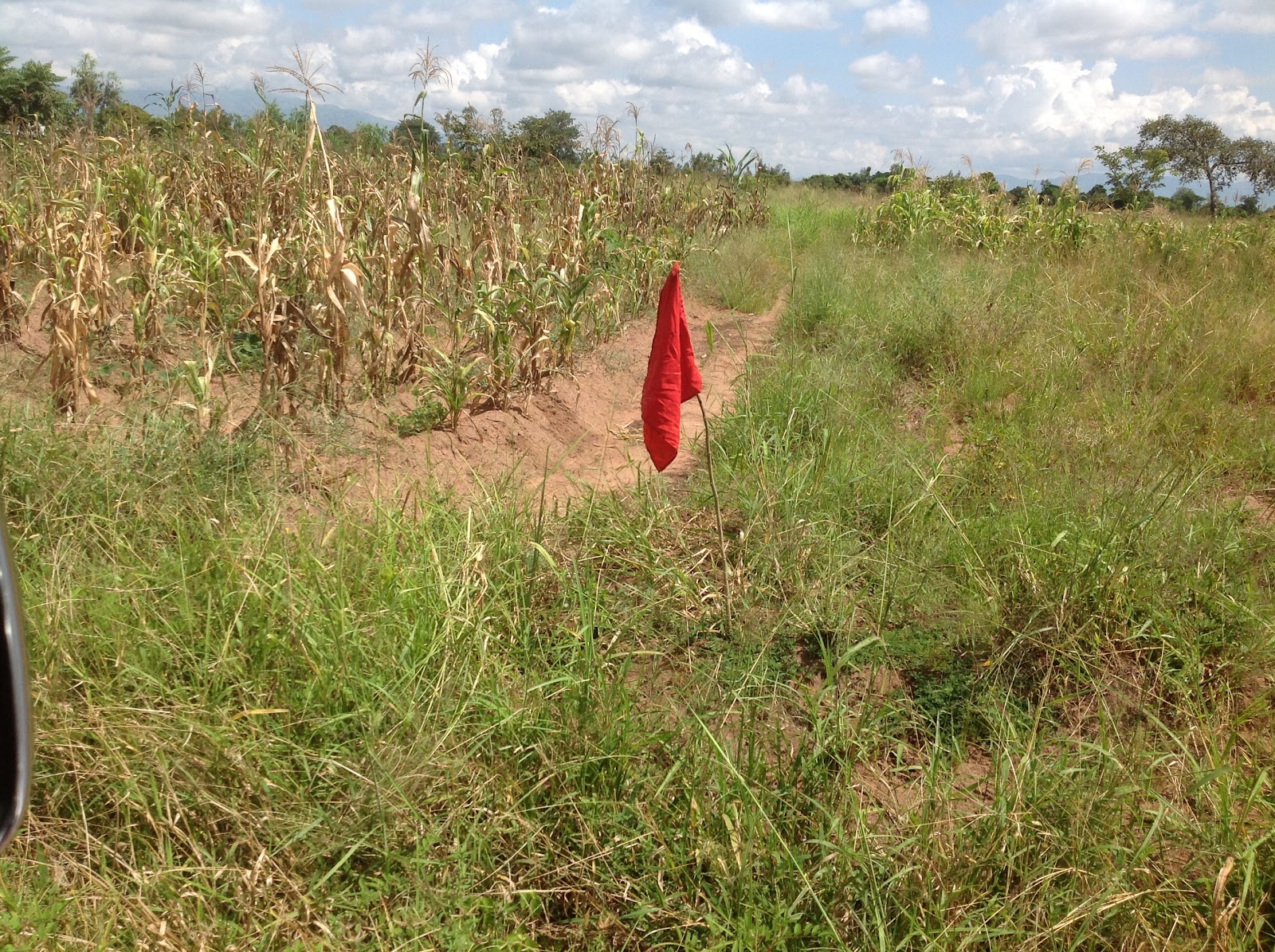
We traveled out to the villages this morning to teach our first crop diversification class.  After we made our last turn, spread across the road at the entrance to the village, we noticed long, leafy willow branches and a little red flag planted in a field just to the side of the road.  A little distance ahead, we could see another branch spread across the road. Between these two branches someone had died.  Bicyclists passing along the road respectfully dismounted and silently passed through the village.  Pedestrians along the way also slowed their pace and moved silently along.

As we turned into the compound where about twenty people had gathered, we noticed a somber mood, and when we got out of our vehicle, greetings were in hushed tones.  I shook hands with each one and expressed our deepest sympathies. All the while, a blending of mournful wails was coming from a home a short distance away, sometimes soft, then rising till it seemed to fill the compound. I asked a friend, Eunice, if the person who died was someone George and I knew.  She said,"Yes, it was Olive, one of the women in your Bible study who lost her 1 year old baby last night." With no warning, tears poured down my face, and I wept. 

In a few moments, I asked if I could visit with the mother to express my personal sympathies, so Eunice took me to the home.  A few men were sitting silently outside the home on the little porch and along an outer wall.  Several women were sitting along the walls, on the dirt floor of the tiny sitting room. I sat down in an available space on the floor by them. I was overwhelmed by the mother's grief, and I bowed with my face down and wept with her and the other women for some time.  Then I reached for the mother's hand and told her how sorry I am for her loss.  She didn't speak, but looked up at me and nodded her understanding.  

Then I said, "Your precious baby is with Jesus now where he will be cared for.  He can't come back to you, but one day you will see him again when you go to be with Jesus." Again, she nodded her understanding.  Again I reached for her hand and said, "We want to help with your expenses for the funeral," and I slipped her some money.  She was very thankful.  I asked, "Is there anything else we can do for you today?"  She said, "Please pray for me."  Again, I bowed and prayed for God's presence to be with her and His peace.  I prayed for Him to comfort her heart and to help her through this difficult time.

When I returned to where I had left George talking with some of the men, one of the women said,  "Thank you for helping with the funeral.  This woman is very poor and had no money for the funeral."  It is common in Malawian culture for individuals to spend all one has on funerals and weddings, and many go into debt to pay for these expenses.  We are thankful we could help her. 

I asked how long the child had been sick, and we were told the baby had become ill with fever and diarrhea two days ago. The mother then took him to the closest clinic, a 45 minute walk from her home. The clinician gave him a shot and some pain medicine and sent him home. He seemed to gain a little strength, then in the middle of the night, he became much worse and  lost consciousness.  The mother then took him to the hospital in town, where he was pronounced dead.  

What a tragic loss. I grieve with those who are grieving this family's loss, but when I heard the sequence of events leading up to his death, I was convinced that the child died from a lack of appropriate and timely medical interventions. 

Medically, the  child died from diarrhea and loss of fluids that continued over a period of two days, but what actually killed him was a failed, ill-equipped, and often indifferent health care system. A simple ORS (oral rehydration solution), made from 1 liter of water, 6 level teaspoons of sugar, and half a teaspoon of salt can easily be made. 

One half liter of ORS per day administered to a toddler restores body fluids and electrolytes and stops diarrhea and vomiting.  Something this simple could have saved this baby's life. The loss of this child's life is an immeasurable tragedy, but knowing the child could have been saved grieves my heart. 

There have been many times when George and I were "just at the right place at the right time" to intervene in some really bad situations. Many times we have prayed for individuals,  and God healed them. Many times we helped people get medical care just at the right time. 

I think of an elderly gentleman in the village, Gray. I will never forget the time we were flagged down as we drove through his village.  Gray could not stand, could not walk or talk. He was drooling and thrashing about and did not have control of his body.  Some people carried him by his arms and legs from his house to our vehicle. 

At the hospital, he was diagnosed with meningitis. We were told later that he would have died if he had not gotten medical care when he did.  None of these events are because we are great.  It is because our great God privileged us to be the answer to their prayers so we can bring Him glory. 

I believe God uses us, not because we are great, but because He knows we direct praise, glory, and honor to God, who alone deserves it.  I will always be thankful for those times when I can say, "It was God!"   

But now... this little one is suddenly gone, and that young mother's heart is breaking.  In my heart I think,  "If only we had known... If only we were there."

As I have thought on these things I have come to this conclusion: God is sovereign, and all of our lives are in His hands. If I pray for someone and they are healed or if someone's life is saved, I certainly can take no credit, and none of the praise is mine. My role is simply to be obedient to God. Ultimately I must rest in the assurance that the outcome is under God's sovereign rule.  

My prayer: "I want to be available to you, Lord, in every situations and obedient in the smallest details, so I will not miss opportunities to represent you well on this earth. Most of all, may I never seek praise for myself so my life will always bring you honor. May I always trust you to do what is best. Amen."